 |
Search Saab9000.com

|
| Procedures |
Rebuilding the Saab 9000 rear brake calipers |
|
|
By GirlySaabFanwith additional photos by Blue CortinaIntroductionThe Saab 9000 rear brakes include a self-adjusting handbrake mechanism. Over the years the handbrake lever can become stiff, preventing the handbrake adjuster from working properly and causing a loss of handbrake and footbrake effectiveness. Since there appears to be a complete lack of information available about the internal workings of these calipers, the usual advice on Saab forums is to replace the calipers with new or reconditioned items. However, GirlySaabFan tackled this problem by rebuilding the calipers herself. This is her story... All
the parts replaced in this procedure are available here.
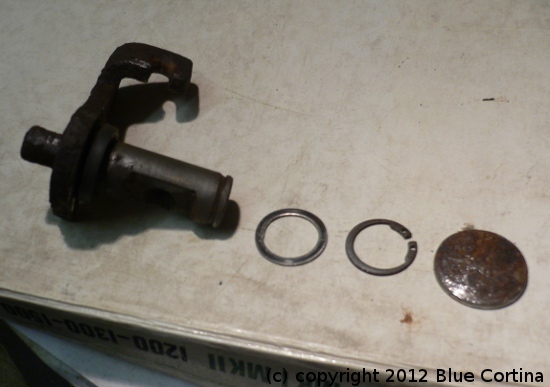
Ensure the repair kit you use includes the metal disc. Most
don't.
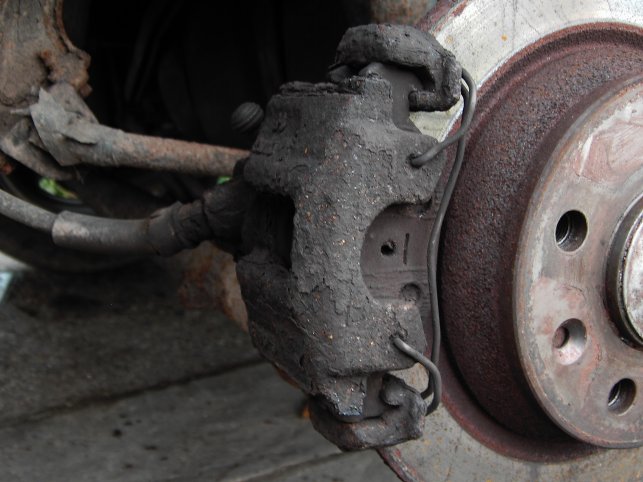
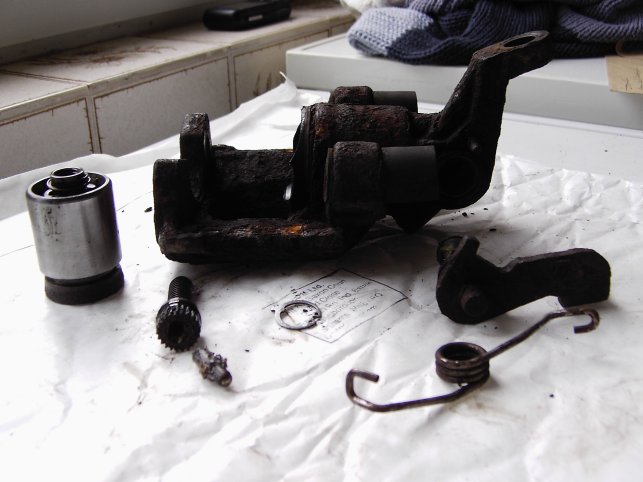
Here's a little story about the reason my 9000's handbrake was rubbish. Be warned-some pictures are scary!! But there is a happy ending.
This is how I did it.......
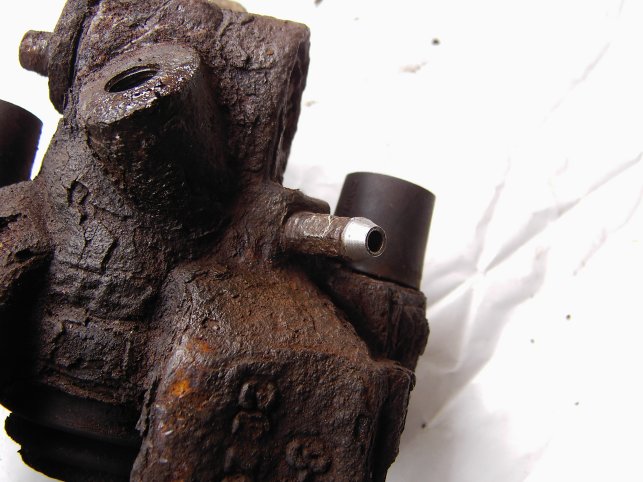
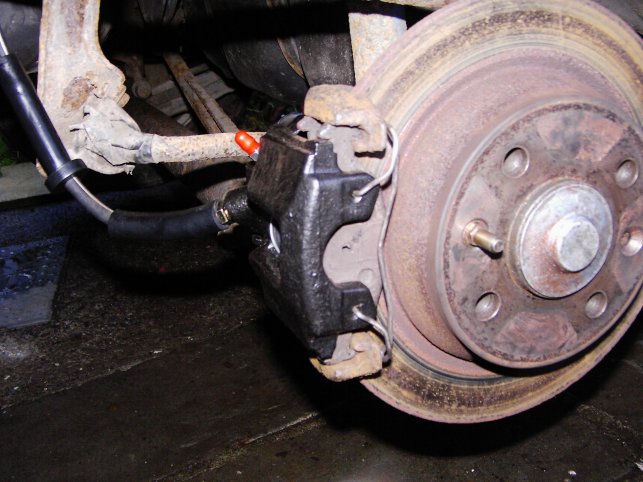
First take nasty rusty thing off the car, remove brake pads and retaining clip and stick it in a vice. The brake hose came off fairly easily using a pipe wrench-the bleed nipple was another story! Which is discussed elsewhere.
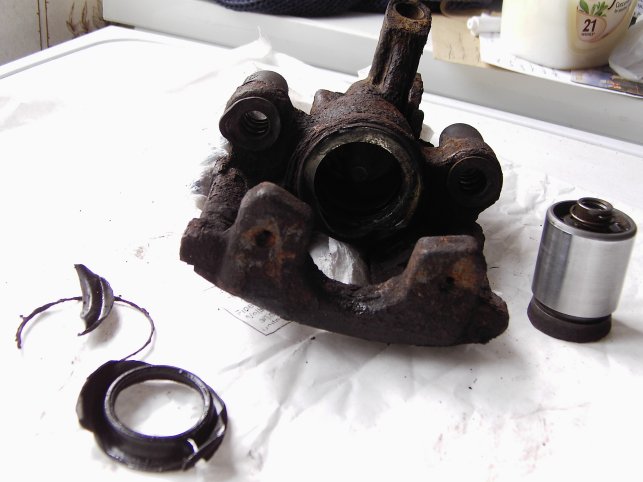
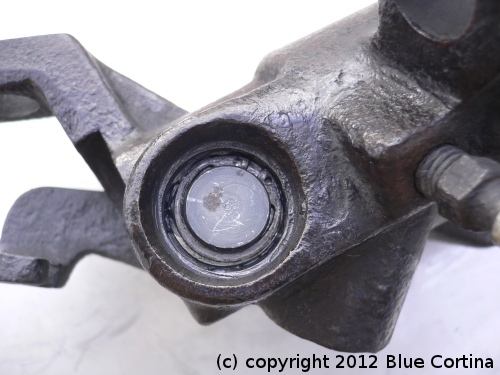
Using an allen key, or similar, turn the adjustment screw CLOCKWISE, this will push the piston out.
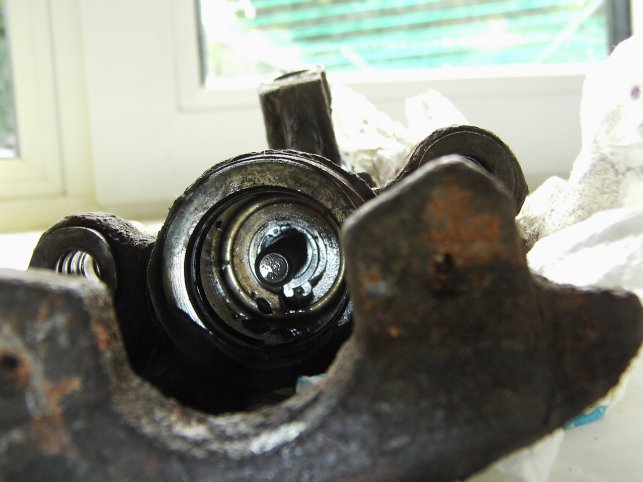
Now for the tricky bit! At the bottom of the bore there lurks a circlip. You will need a pair of longer than usual circlip pliers, or, failing that, a bit of imagination and some of those odd bits of stuff you kept just in case they might come in useful!!
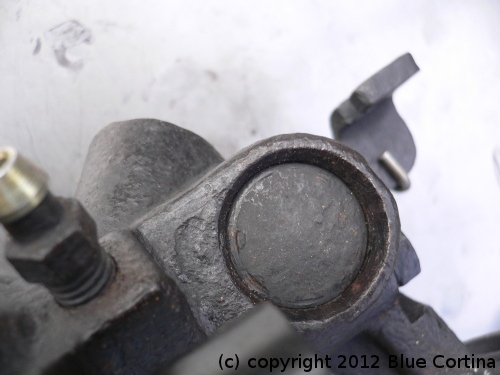
Drill a small hole in the metal disc that covers the end of the handbrake actuator lever, then remove the disc by levering it out with a screwdriver inserted in the hole. This will reveal the circlip at the end of the lever spindle. Remove the circlip and washer. The lever should now come out.
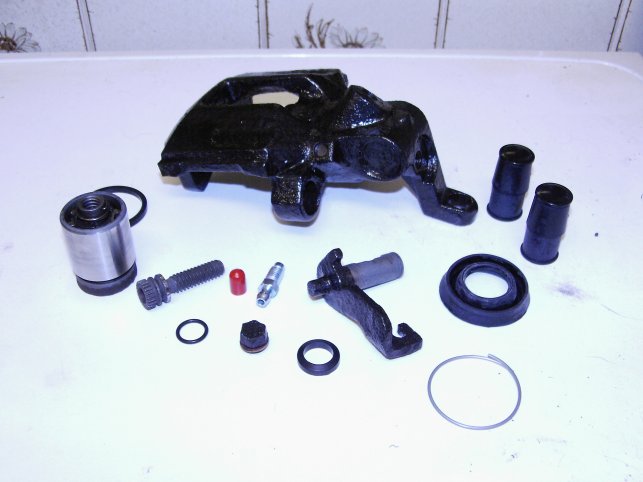
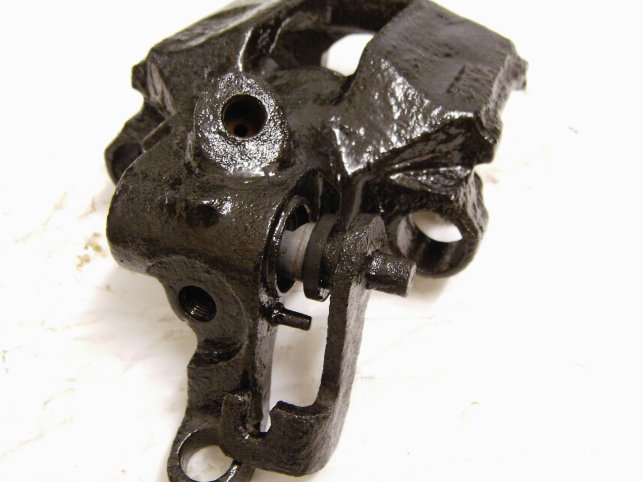
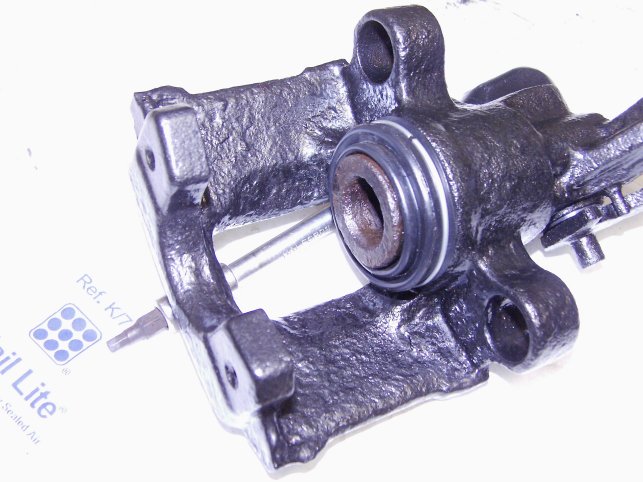
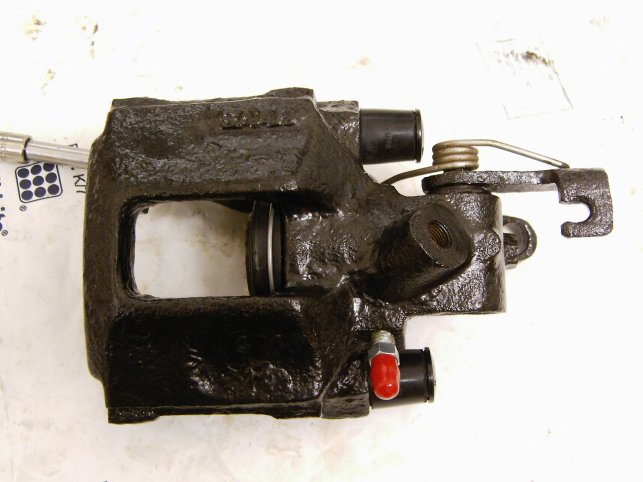
Ok:- All cleaned, painted and ready for reassembly. How you make yours look presentable is up to you. Bit different, isn't it? It is the same one, honest! All the parts I
replaced are available from here.
And here's how I put it back together.
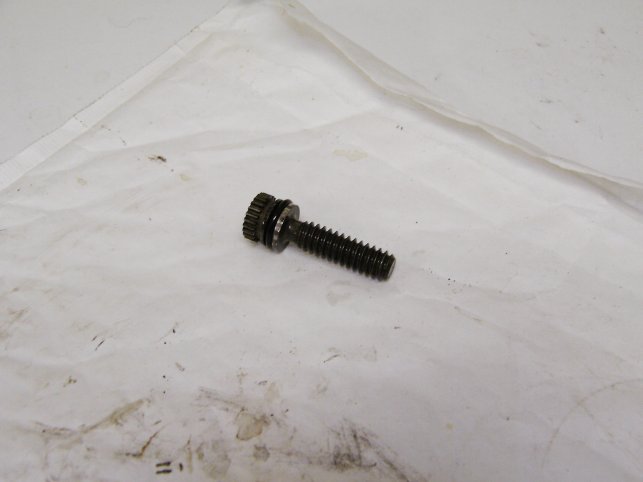
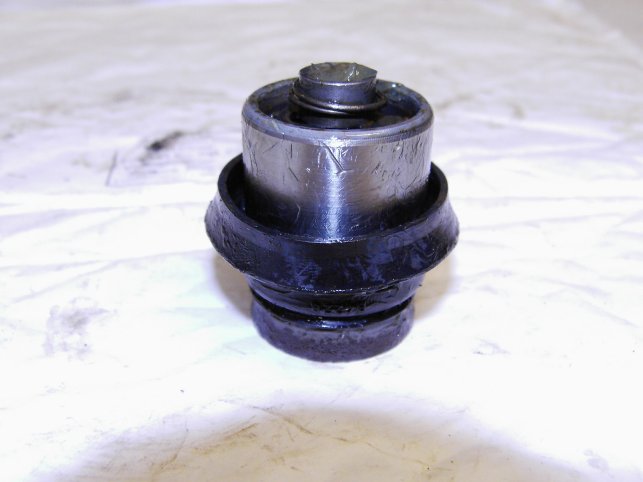
First dip the o-ring in some fresh brake fluid and slip it over the threads of the screw and into the first groove. See below.
Push the seal onto the actuator lever and push it back into it's socket. I used brake assembly grease on it. The flat side of the seal goes towards the caliper body.
Then put the pin/rod/wotsit thing into it's cup on the head of the screw-I used grease again to hold it in place.
If you find it's very difficult to get the circlip in, try giving the screw a gentle tap to make sure it's fully seated. Give the piston a light coating of assembly grease and fit the dust boot, apply grease to the small hole in the middle of the piston- this means the screw threads will be thoroughly greased too.
Now that's much less scary.
See, I told you it had a happy ending. The End |



|
|
| saab9000.com is an enthusiast's web site
and is not in any way affiliated with Saab Automobile. A big "thank
you" to Saab for producing the 9000. All information is presented in good faith. However, I am not a trained mechanic, just an enthusiast.Therefore, it is your responsibility to ensure that you are competent to carry out any procedures presented here and that they are correct. No responsibility can be accepted for any inaccuracies or consequential loss, injury or damage. |
Copyright © 2001-2013 Bill Jones |